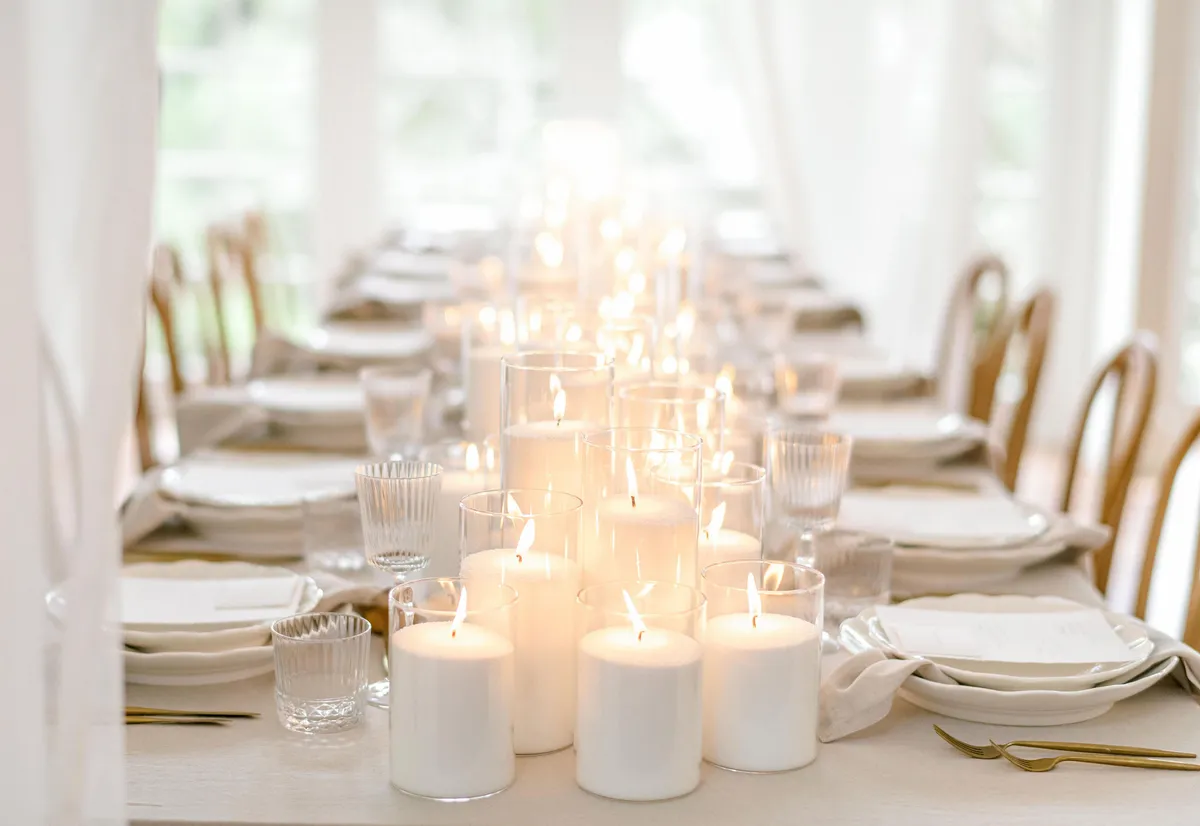
How to Style a White Wedding Without It Feeling Cold
Author: The Chameleon Team
Estimated Reading Time: 8 minutes
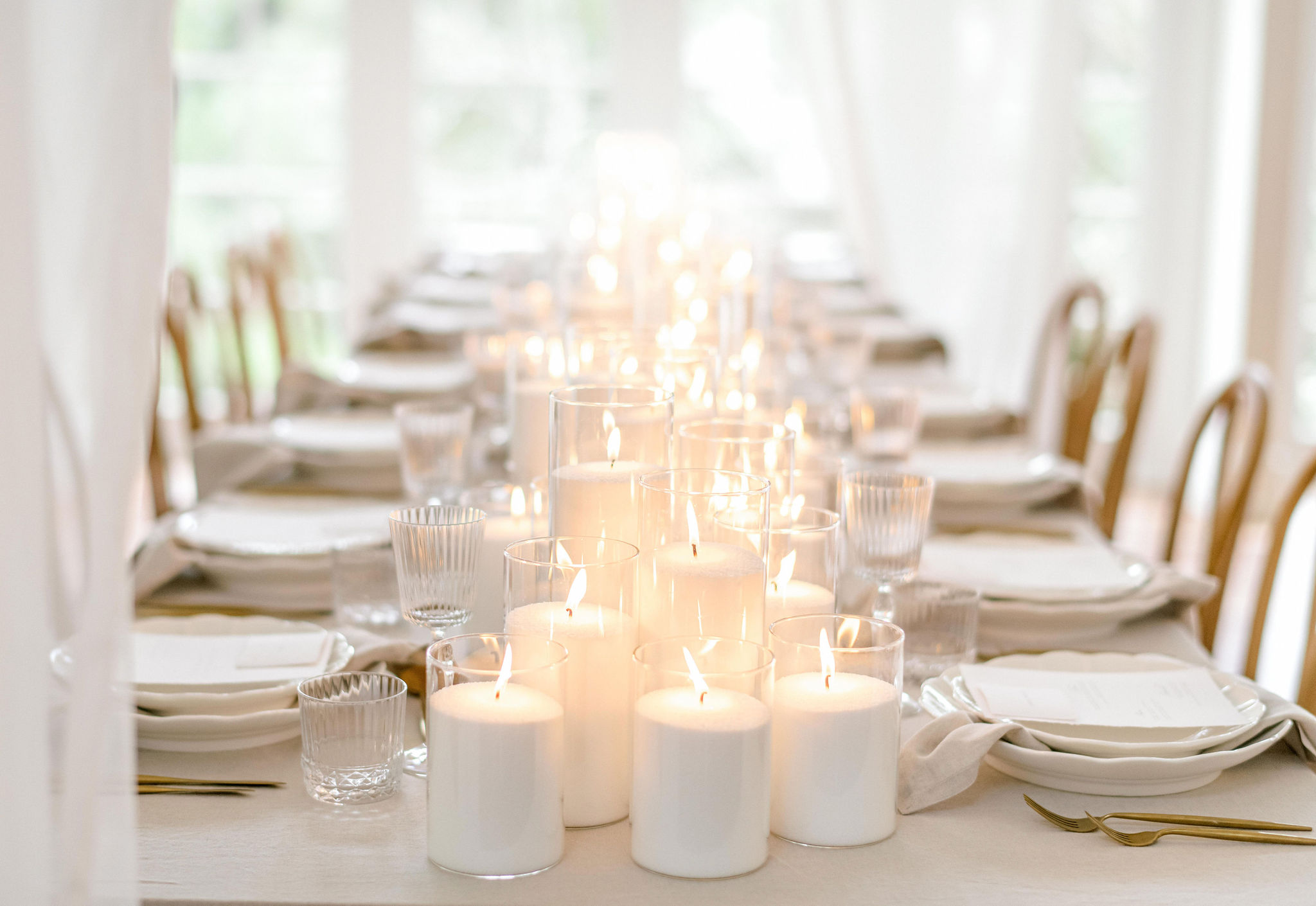
A white wedding feels cold when it relies on colour alone — flat lighting, matching whites and no textural depth. To keep an all-white palette warm and inviting, layer different white tones, add natural texture, and build the room around candlelight rather than daylight or overhead lighting. Warmth comes from light and layering, not colour choice.
White weddings have a reputation problem.
Done well, they feel luminous, romantic and effortlessly refined. Done without care, they can feel sterile — a room of matching whites under flat light, with nothing for the eye or the emotion to hold onto.
The difference rarely comes down to the colour itself.
It comes down to what surrounds it — texture, layering and, most importantly, the quality of light in the room. This guide walks through exactly how to keep an all-white wedding feeling warm, intimate and unmistakably yours.
Why do some white weddings feel cold?
Cold white weddings usually share the same three problems.
Flat lighting. Daylight or bright overhead lighting flattens white tones, making them read as stark rather than soft. Without warmth in the light source itself, white surfaces can feel clinical.
Single-tone matching. When every white element is the exact same shade — linen, florals, chairs, stationery — the eye has nothing to differentiate. The room reads as blank rather than layered.
Lack of texture. Smooth, uniform surfaces without variation in fabric, finish or form can feel unfinished, even when technically elegant.
None of these problems are about white as a colour.
They are about how white is lit, layered and textured within a space.
Because the goal was never a room without colour. It was a room without noise — and noise-free does not have to mean warmth-free.
How do you layer whites so they feel warm instead of flat?
Think in tones, not in "white."
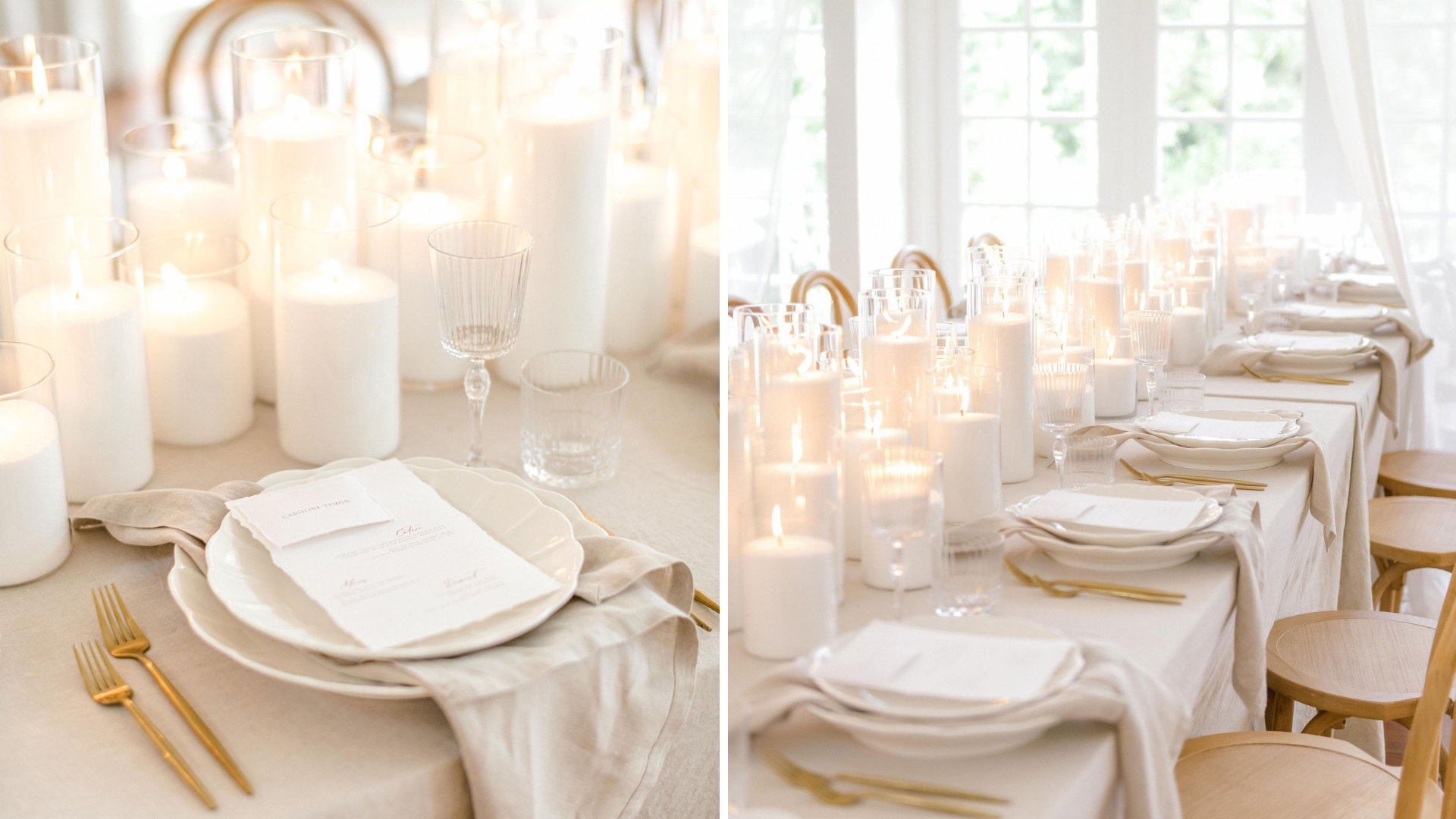
Ivory, cloud white, soft pearl, champagne and warm bone each behave differently under light. Combining several of these tones — rather than choosing one and repeating it everywhere — is what gives an all-white wedding its depth.
A simple layering approach:
Linen and table textiles: lean ivory or soft bone rather than bright white
Ceramics and glassware: introduce pearl or milk-glass tones for subtle contrast
Florals: mix cream, soft blush and the palest sage alongside pure white blooms
Stationery and details: warm off-whites read as considered, not matched
This layering principle mirrors what we built for our Cloud Dancer editorial installation, where soft ivory, champagne glow and mist grey were combined deliberately — never a single flat white, always a conversation between tones.
Because a truly refined white palette is never really one colour.
It is several, working quietly together.
What role does lighting play in keeping a white wedding warm?
Lighting is where most cold white weddings go wrong — and where the fix is simplest.
Bright, cool-toned lighting (fluorescent overheads, harsh uplighting, unfiltered daylight through large windows) drains warmth from white surfaces instantly. Candlelight does the opposite.
Why candlelight works so well against white:
Its warm, golden tone contrasts directly with cool white surfaces, creating depth rather than flatness
Its movement (the flicker, the shift) stops a white room from feeling static
It concentrates light at table height and eye level, rather than washing the whole room in flat overhead brightness
This is not a small styling detail — it is often the single biggest factor in whether a white wedding feels intimate or sterile.
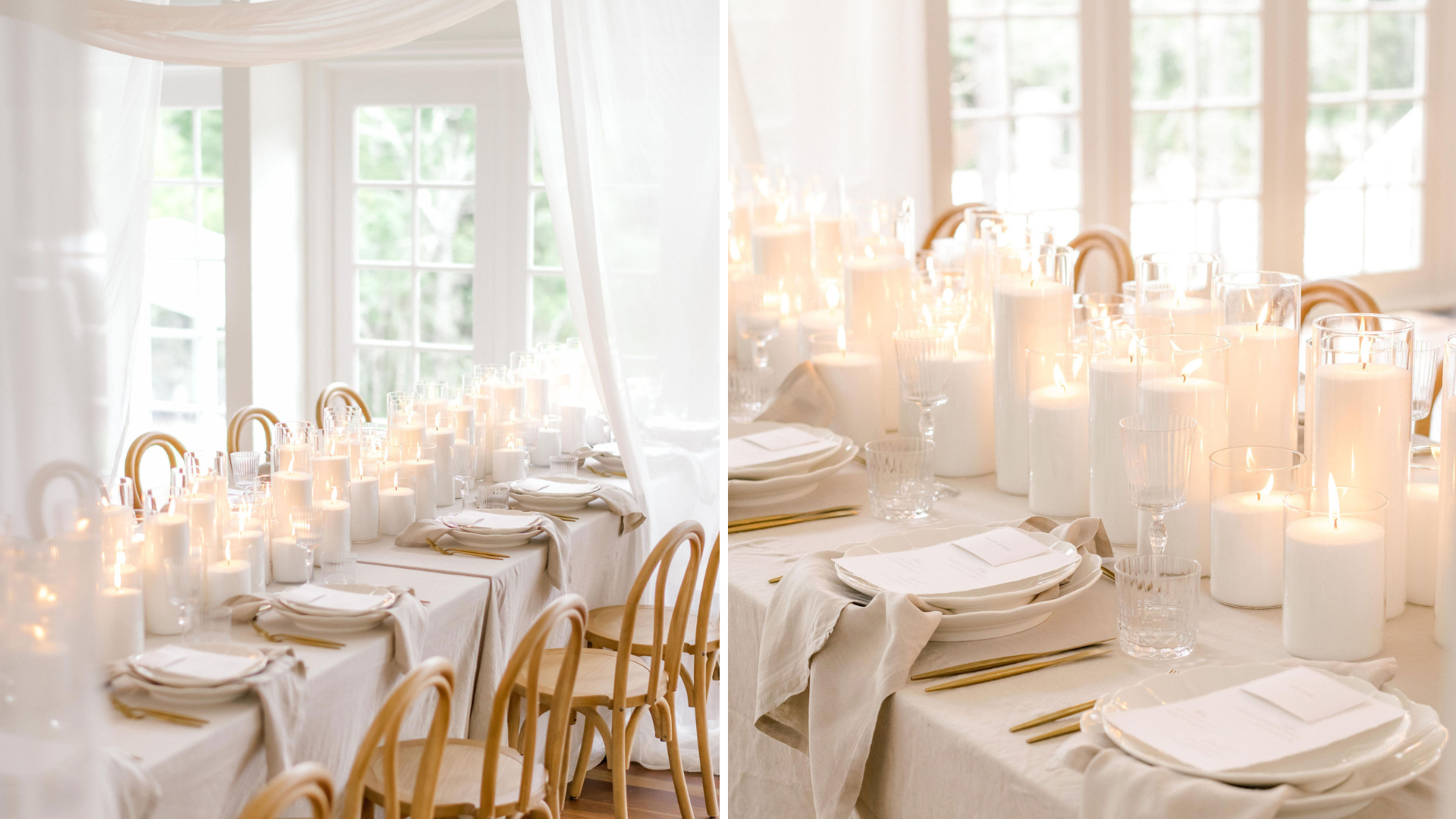
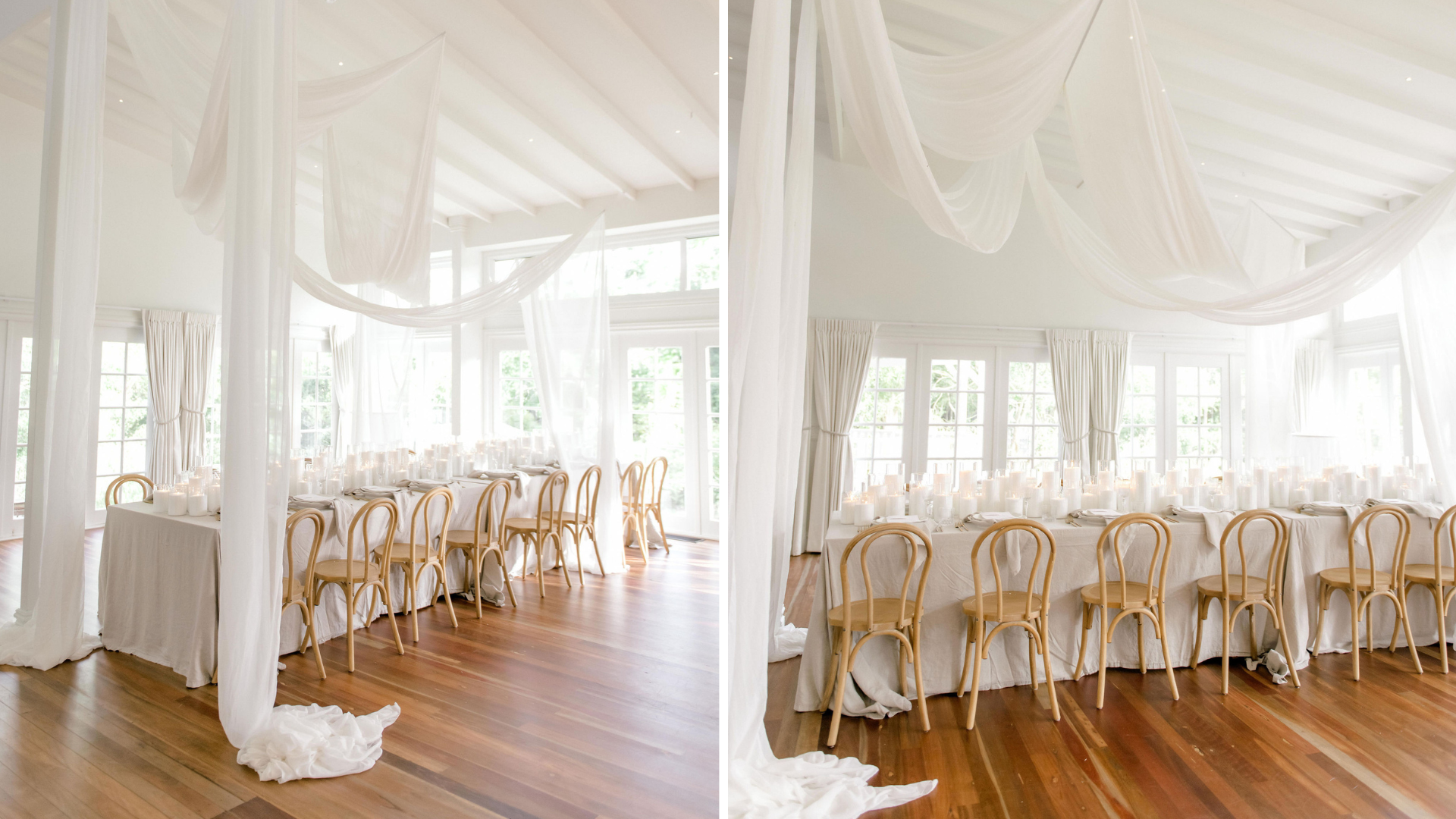
A field of candlelight along a bridal table, an aisle lined with glowing sand candles, or a scattering of low flame across guest tables all do the same job: they give white something to glow against.
Claudia & Alex Stratos, describing their own wedding day, put it simply:
"The candles styling on the day was absolutely beautiful and provided the perfect ambience."
Ambience — not just aesthetics — is the goal.
![White bridal table styled with warm candlelight to avoid a cold all-white wedding look.]](https://assets.cdn.filesafe.space/QiVFcW4hsHQIRGLlDwRv/media/6a9e7df8245b1a41b86723d3.png "White bridal table styled with warm candlelight to avoid a cold all-white wedding look.]")
How do you add texture to an all-white wedding?
Texture is what stops a white palette from feeling one-dimensional.
Without variation in surface and material, even the most beautifully chosen whites can flatten into sameness. Texture gives the eye somewhere to rest and the room a sense of craft.
Ways to introduce texture without introducing colour:
Fabric layering: linen, silk, organza and lace all read differently in white — combining two or three textiles adds instant depth
Natural materials: raw timber, rattan, stone or driftwood elements ground a white palette and prevent it from feeling untouched
Draping and movement: soft suspended fabric overhead (as used throughout our own Cloud Dancer installation) introduces both texture and motion
Varied floral forms: combining structured blooms with looser, more organic textures avoids a flat, uniform look
Because refined is not the same as plain.
A white wedding with genuine texture feels tactile, considered and lived-in — not staged.
Explore our free styling resource → Wedding Blooms & Sand Candle Styling Guide
Does an all-white wedding need any colour at all?
Not necessarily — but a small amount of contrast can help.
Many of the most successful white weddings introduce one quiet supporting tone: a soft blush, a warm champagne gold, a mist grey or a muted sage. This is not about breaking the palette. It is about giving it just enough contrast to avoid flatness.
The goal is restraint, not decoration for its own sake.
One contrast tone, used sparingly — in ribbon, in a single floral variety, in metallic accents — is often enough to keep an all-white scheme from feeling one-note, while still reading as a white wedding overall.
Because the palette should feel curated. Not incomplete.
The Chameleon Perspective: warmth is a feeling, not a colour
Here is what we have learned from styling white weddings across venues, seasons and scales.
Guests rarely describe a beautifully styled white wedding by its colour palette. They describe how the room felt — warm, intimate, glowing, alive. That feeling has very little to do with whether the linen was ivory or bone, and everything to do with the light inside the room.
This is the quiet philosophy behind every installation we build.
The glow is never just about light. It is about the feeling that light creates — the warmth that turns a beautifully coordinated room into a genuinely emotional one. A white wedding styled without that warmth can look correct and still feel unfinished.
A white wedding styled with it becomes unforgettable.
Not just a colour scheme. An atmosphere.
Frequently Asked Questions
Is white a difficult colour to style for a wedding?
Not difficult — but it is unforgiving of flat lighting and single-tone matching. White rewards careful layering (ivory, pearl, champagne, bone) and warm light sources far more than bold colour palettes do, because there is less colour contrast to hide behind.
What lighting works best for a white wedding?
Warm, low candlelight consistently outperforms bright or cool-toned lighting for all-white palettes. Its golden tone contrasts against white surfaces, creating depth and intimacy, while its natural movement stops the room from feeling static or flat.
Should I avoid all colour in a white wedding?
Not necessarily. A single supporting tone — soft blush, champagne gold or mist grey — used sparingly can add contrast without disrupting the overall white palette. The key is restraint: one quiet accent, not several competing ones.
How many white tones should I use in my styling?
Aim for at least three — for example, ivory linen, pearl ceramics and cream florals. Combining tones creates the layered depth that a single, flat white cannot achieve on its own.
Do white weddings work in every season?
Yes, though the styling emphasis shifts. Warmer months lean into airy draping and lighter textures, while cooler months benefit from denser candlelight and richer textural layering to maintain warmth against shorter daylight hours.
Closing
A white wedding was never meant to feel empty.
Styled with layered tones, genuine texture and warm, flickering candlelight, it becomes one of the most romantic palettes a couple can choose — luminous rather than sterile, considered rather than plain. The colour was never the risk. The lighting was always the answer.
Soft. Warm. Undeniably yours.
Creative Team:
Styling, Planning & Florals @ivyandbleuevents
Photography @kaitlinmareephotography
Content Creation @taycapturescontent_
Candles @chameleonsandcandle
Venue @kwila.lodge
Makeup @lenisepattini_bridal
Candle @chameleonsandcandle
Bridal Dresses @thewhiteaisle_bridal
Pajama’s @homebodii
Bridesmaids Dresses @billy_j_bridal @houseofcb
Guest Audio Book @memoriesandmomentsco_
Lemoncello @wearefamiliarspirits
